
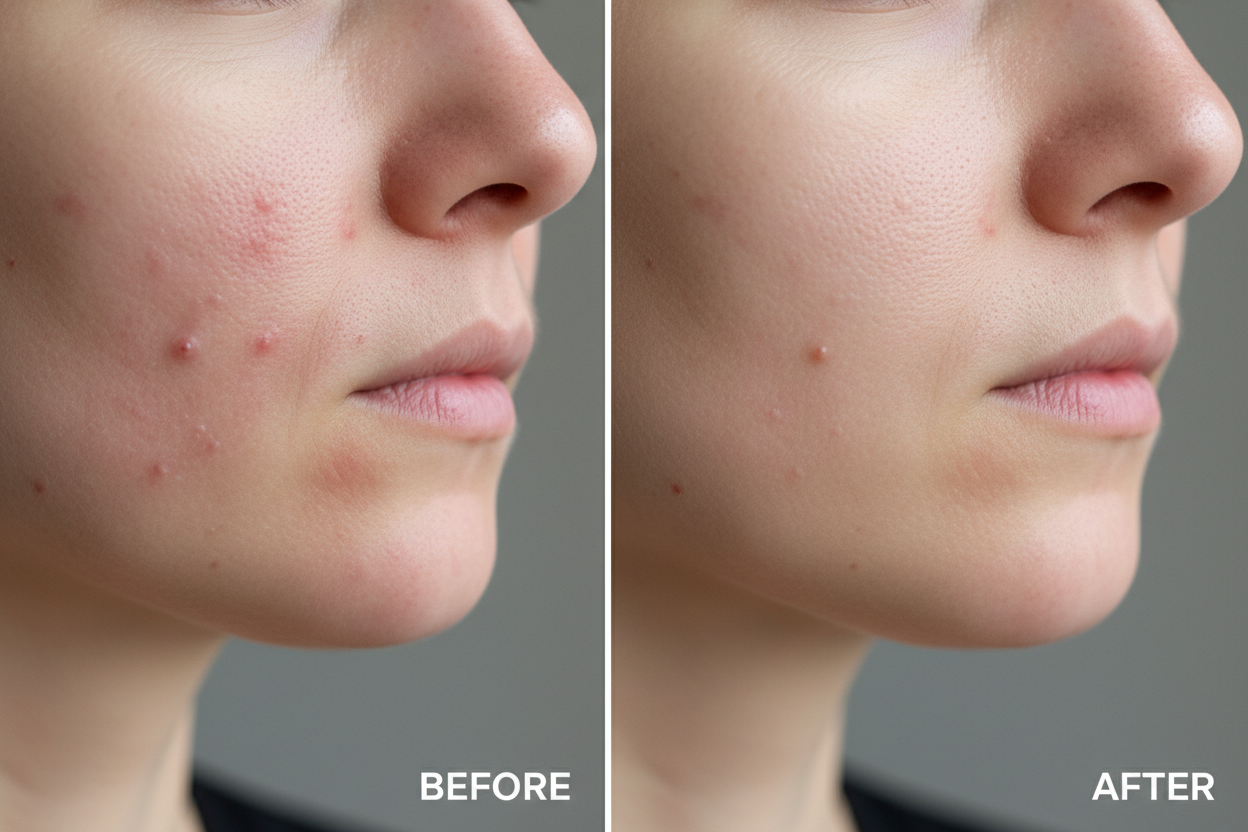
Stop Scrubbing, Start Soothing: Why Your "Clean" Routine Might Be Causing Your Acne
We’ve all been there: you wake up, see a fresh breakout in the mirror, and your first instinct is to scrub it into oblivion. There is a persistent, frustrating myth that acne is a result of being "dirty" that if you could just wash your face one more time or use a grittier scrub, those pores would finally clear up.
But here’s the truth: Acne is an inflammatory disorder, not a hygiene issue. If you’ve been "sandpapering" your skin in hopes of a glow-up, it’s time to put down the physical scrub and understand the science of what’s actually happening beneath the surface.
The Four Pillars of a Breakout
Acne isn't just one thing; it’s a perfect storm of four biological factors working together:
-
Excess Sebum: Your oil glands are overachievers.
-
Clogged Pores: Dead skin cells don't shed properly and get trapped.
-
Bacteria: Specifically C. acnes, which thrives in those clogged, oily environments.
-
Inflammation: Your body’s immune response to the bacteria and blockage.
The "Squeaky Clean" Trap
When you wash your face excessively (more than twice a day) or use harsh, abrasive scrubs, you aren't "cleaning" the acne away. You are actually stripping your acid mantle, the thin, protective film on the skin's surface that acts as your first line of defense.
The Damage Cycle:
-
Barrier Breakdown: Without the acid mantle, your skin is vulnerable to irritants and more bacteria.
-
The Panic Signal: When your skin feels bone-dry and stripped, your brain sends a signal to your sebaceous glands to go into overdrive.
-
The Result: Your skin produces more oil to compensate for what you lost, leading to, you guessed it... more breakouts.
The Esthetician’s Strategy: Quality Over Frequency
If "more washing" isn't the answer, what is? The pros focus on a Double Cleanse at night and targeted, gentle treatments.
| Step | Action | Why it Works |
| 1. Oil Cleanser | Use a cleansing balm or oil first. | Oil dissolves oil. It breaks down SPF, makeup, and excess sebum without stripping the skin. |
| 2. Gentle Treatment | Use a water-based cleanser with actives. | Now that the surface is clear, ingredients like Salicylic Acid can actually get into the pore. |
| 3. Targeted Care | Apply anti-inflammatories. | Ingredients like Niacinamide soothe redness and repair the barrier you've been fighting. |
What to Avoid: Breaking the Cycle of Irritation
When you’re fighting breakouts, your skin is already in a state of "high alert." Adding physical friction or introducing old bacteria is like throwing gasoline on a fire. To give your skin a chance to heal, eliminate these common habits that do more harm than good:
-
The "Face Cloth Friction" Mistake: Never use a washcloth to aggressively scrub your skin. The fibers can create micro-tears in your delicate barrier. Instead, use your hands to cleanse, and use the cloth only to blot your face dry. * The "One-and-Done" Towel Rule: Damp towels are a breeding ground for bacteria. If you use a washcloth to pat dry, use a fresh, clean one every single day. Using yesterday’s towel is just reapplying old bacteria to your newly cleaned pores.
-
Pillowcase Neglect: You spend eight hours a night pressing your face into a fabric that collects hair oil, sweat, and drool. To keep your skin clear, change your pillowcase every night (or at least every other night by flipping it over).
-
The "Sandpaper" Physical Scrubs: Avoid products containing jagged exfoliants like crushed walnut shells or apricot pits. These create uneven micro-shards that damage the skin surface. If you must exfoliate, look for round jojoba beads or, better yet, chemical exfoliants like salicylic, Lactic or Mandelic acid.
-
Over-Stripping with Toners: Stay away from "astringents" that are heavy on denatured alcohol. That stinging sensation isn't "the feeling of it working" it’s the feeling of your protective oils being dissolved, which will only trigger an oil-slick reaction later.
-
Picking and Prodding: It’s tempting, but "popping" a pimple pushes bacteria deeper into the dermis and almost guarantees a scar or post-inflammatory hyperpigmentation (PIH).
When Professional Intervention is Necessary: The Accutane Option
Sometimes, despite a perfect routine and the gentlest care, topical treatments and lifestyle changes aren't enough to calm the "perfect storm" of inflammatory acne. In cases of severe, cystic, or scarring acne, it may be time to move beyond the bathroom cabinet and consult a professional.
For many, the gold standard for long-term clearance is Isotretinoin (commonly known by the brand name Accutane). It is one of the few treatments that addresses all four causes of acne simultaneously. However, it is not a decision to be made lightly:
-
The Power of the Treatment: It works by permanently shrinking the oil glands and slowing down the production of skin cells that clog pores.
-
Serious Side Effects: Because it is a systemic medication, the side effects can be significant. They range from extreme dryness of the skin, lips, and eyes to more serious concerns like joint pain, changes in mood, and potential liver stress.
-
The Medical Requirement: This is a powerful medication that requires strict oversight and approval from a board-certified dermatologist. You will need regular blood tests and, in many regions, participation in monitoring programs (like iPLEDGE) to ensure the treatment is being handled safely.
If you feel like you’ve tried everything and your acne is impacting your quality of life or leaving permanent scars, don't lose hope, talk to your doctor about whether a medical-grade intervention is the right path for you.
The Bottom Line
Stop trying to "sandpaper" your skin from the outside. You cannot scrub away a biological inflammatory process. If you’re struggling with persistent acne, stop scrubbing and start soothing. Focus on ingredients that treat the pore from the inside out and respect your skin's natural barrier. Your face will thank you.